Garage door weather damage weakens your door’s structure, ruins its appearance, and compromises the safety of your home. A weather damaged garage door leaves your garage exposed to the elements and creates security risks for your property. Garage door storm damage from hurricanes, heavy rain, and hail can dent panels, bend tracks, and snap springs overnight. Furthermore, a storm damaged garage door often looks functional but hides dangerous structural problems underneath. Garage door wind damage warps panels, misaligns tracks, and blows doors off their rails during severe weather events. In addition, a wind damaged garage door puts stress on every connected component including cables, rollers, and the opener motor. Garage door water damage causes rust, rot, and swelling that deteriorate your door over time.
Likewise, garage door moisture damage and garage door wind damage and garage door storm damage affects seals, hardware, and insulation without obvious visible signs until the problem is severe. If your door took a hit from recent weather, search for garage door weather damage near you to get a professional inspection.
How Weather Damages Your Garage Door
Garage door weather damage happens gradually through daily exposure and suddenly through severe weather events. Specifically, your garage door faces more environmental stress than almost any other part of your home because it is the largest moving exterior surface.
Here are the most common weather threats to your garage door:
- Heavy rain drives water into panel seams, tracks, and hardware connections
- High winds create pressure that bows panels inward or outward
- Hail dents panels, cracks paint, and damages decorative elements
- Extreme heat warps metal panels and degrades rubber seals
- Freezing temperatures make springs brittle and cause metal contraction
- Humidity promotes rust on springs, tracks, rollers, and hinges
- Salt air in coastal areas accelerates corrosion on all metal components
Because your garage door endures every weather condition year-round, regular inspection prevents minor weather exposure from becoming major structural failure. Therefore, understanding how different weather types cause damage helps you catch problems early.
Signs of Garage Door Storm Damage
Garage door storm damage is not always obvious after a major weather event. In fact, a storm damaged garage door can appear normal from the outside while hiding serious problems.
Here are the key signs to check after a storm:
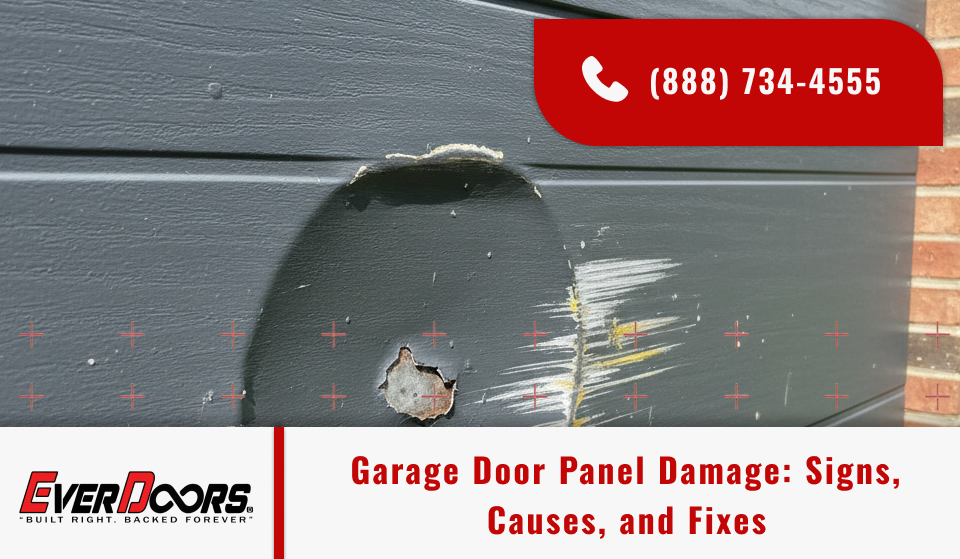
- Dents or dings on panels from hail or flying debris
- Panels that appear bowed, warped, or pushed inward
- Gaps between panels or between the door and the frame
- The door shakes or rattles more than usual during operation
- New grinding or scraping sounds when opening or closing
- The door stops or reverses partway through its travel
- Visible cracks in wooden panels or fiberglass surfaces
- Water stains or pooling inside the garage near the door
Furthermore, check your springs, cables, and tracks for any signs of bending or displacement. In addition, test the door balance by disconnecting the opener and lifting manually to the halfway point. However, if the door does not stay in place, the springs may have been stressed or damaged by storm conditions. Consequently, scheduling a professional inspection after any major storm protects your family and your investment.
How Wind Damage Affects Your Garage Door
Garage door wind damage is one of the most dangerous weather threats because wind creates extreme pressure against the door’s surface. Specifically, a standard two-car garage door presents over 120 square feet of surface area for wind to push against.
Here is how wind damages your garage door:
Panel warping and bowing Strong wind gusts push panels inward or pull them outward depending on direction. Furthermore, repeated wind exposure causes permanent warping that prevents the door from sealing properly. In addition, a wind damaged garage door with bowed panels lets rain, dust, and pests enter your garage.
Track misalignment Wind force transmitted through the panels shifts the tracks out of alignment. Consequently, the door binds, scrapes, or jumps off the track entirely. Moreover, misaligned tracks put uneven stress on the opener motor and cables.
Complete door blowout In extreme wind events, garage doors can blow inward completely. As a result, this exposes your home’s interior to wind and water damage. Furthermore, a blown-in door can damage vehicles, stored items, and the garage structure itself. Therefore, homes in hurricane and tornado zones benefit from wind-rated garage doors designed to resist high pressure.
Hardware stress Wind vibration loosens bolts, screws, and bracket connections over time. Consequently, hinges, rollers, and track brackets weaken with each wind event. In addition, spring tension changes as hardware shifts position.
Water and Moisture Damage to Your Garage Door
Garage door water damage develops slowly and often goes unnoticed until significant deterioration has occurred. Specifically, garage door moisture damage affects different door materials in different ways.
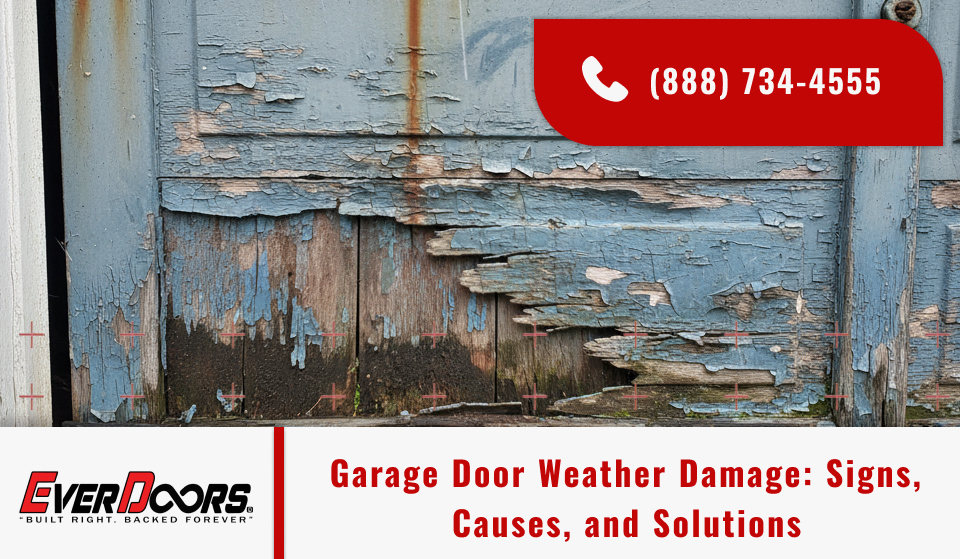
Wood garage doors Water causes wood panels to swell, warp, crack, and eventually rot. Furthermore, moisture penetrates paint or stain coatings through small chips and scratches. In addition, untreated water damage leads to mold growth inside the wood structure.
Steel garage doors Water causes rust that starts at paint chips, scratches, and panel edges. Consequently, rust spreads beneath the paint surface and weakens the metal over time. Furthermore, bottom panels rust fastest because they contact standing water on the garage floor.
Aluminum garage doors Although aluminum resists rust, water causes oxidation that dulls the surface and weakens joints. In addition, moisture trapped between insulation layers promotes mold and reduces thermal performance.
Weather seals and gaskets Water degrades rubber and vinyl weather seals along the bottom, sides, and top of the door. As a result, degraded seals allow more water to enter the garage. Furthermore, cracked or missing seals create drafts that increase energy costs.
Because water damage compounds over time, addressing garage door moisture damage early prevents costly panel replacement or full door replacement.
How to Protect Your Garage Door
Preventing garage door weather damage requires regular maintenance and proactive upgrades. Furthermore, most weather damage is preventable with simple steps that cost far less than repairs.
Here are effective ways to protect your garage door:
- Inspect and replace weather seals along the bottom and sides annually
- Also, touch up paint chips and scratches immediately to prevent rust
- Furthermore, lubricate all moving parts including springs, rollers, and hinges every six months
- Keep the garage floor drain clear so water does not pool against the door
- Additionally, install a wind-rated garage door if you live in a hurricane or high-wind zone
- Trim trees and secure loose items near the garage before storm season
- Finally, schedule a professional inspection after any severe weather event
These preventive measures protect your investment and extend the life of your garage door. Consequently, spending a small amount on prevention saves thousands in storm damage repairs.
When to Repair vs Replace a Weather Damaged Garage Door
Some garage door weather damage requires repair while other damage demands full replacement. Therefore, understanding the difference saves you money and ensures your safety.
Repair is appropriate when:
- Only one or two panels are dented or damaged
- Also, track misalignment is minor and adjustable
- Weather seals need replacement but the door structure is sound
- Surface rust is limited to small areas that can be treated
Replacement is necessary when:
- Multiple panels are warped, cracked, or structurally compromised
- Also, the door frame is bent or twisted from wind or impact damage
- Furthermore, rust has penetrated through metal panels
- The door is more than 15 years old and lacks wind rating
- Additionally, repair costs exceed 50 percent of replacement cost
A professional inspection determines whether repair or replacement is the best option. Specifically, a technician evaluates structural integrity, hardware condition, and overall door safety before recommending the right solution.
When to Call a Professional
Weather damage often hides problems that only a trained technician can identify. Therefore, contact a professional for garage door weather damage near you if any of the following apply:
- Your door took a direct hit from a storm, fallen tree, or flying debris
- Panels are dented, bowed, or cracked after a weather event
- The door makes new sounds or operates differently after a storm
- You see rust, rot, or swelling on any part of the door
- Water enters your garage through or around the door
- Your door does not have a wind rating and you live in a storm-prone area
A garage door weather damage expert near you inspects every component, identifies hidden problems, and recommends the most cost-effective solution. Specifically, they check panels, tracks, springs, cables, hardware, seals, and the opener system. In addition, they document damage for insurance claims if needed.
In geo-location, Do not wait for weather damage to compromise your home’s safety and security. Instead, call today to schedule your professional weather damage inspection and protect your garage door.
Phone: (888) 734-4555
Email:
Website: https://oh.everdoors.com/