Garage door safety tips protect your family, pets, and property from serious injuries caused by the heaviest moving object in your home. Following garage door safety advice prevents accidents that send thousands of people to emergency rooms every year. Garage door child safety is especially critical because children are the most vulnerable to crushing injuries and entrapment. Furthermore, garage door kid safety requires both working equipment and smart habits from every adult in the household. Understanding garage door safety features gives you confidence that your door operates safely every time it opens and closes. In addition, garage door safety systems like sensors and auto reverse mechanisms work together as multiple layers of protection. Testing your garage door auto reverse monthly takes less than a minute and could save a life.
Likewise, performing a simple garage door reverse test confirms that your door stops and reverses when it contacts an object. If your safety features are not working properly, search for garage door safety tips near you to get professional help immediately.
Why Garage Door Safety Matters
Your garage door weighs between 130 and 400 pounds depending on size and material. Consequently, a door that closes without functioning safety features creates a serious crush hazard for anyone standing underneath.
Here are the risks of ignoring garage door safety:
- Crushing injuries to children, adults, and pets caught under a closing door
- Entrapment between door panels that can break fingers and hands
- Property damage to vehicles, bikes, and tools left in the door’s path
- Carbon monoxide exposure from vehicles running in a garage with a malfunctioning door
- Home security risks from a door that does not close or lock properly
Because these dangers are preventable, following basic garage door safety tips eliminates nearly all risk. Therefore, every homeowner should understand how their door works and how to keep it operating safely.
Essential Garage Door Child Safety Practices
Garage door child safety requires attention from every parent and caregiver in the household. In fact, children are at the highest risk because they may not understand the danger of a moving garage door.
Here are critical garage door kid safety rules every family should follow:
- Teach children that the garage door is not a toy and never to play near or under it
- Also, keep wall buttons and remotes out of reach of young children
- Furthermore, never let children operate the garage door without adult supervision
- Explain that they should never try to race under a closing door
- Additionally, keep fingers and hands away from panel joints and hinges when the door moves
- Never leave a garage door partially open as children may try to crawl under it
- Finally, install the wall button at least five feet above the floor so small children cannot reach it
Garage door child safety combines education with properly maintained equipment. Moreover, children learn by watching adults. Consequently, always model safe behavior by waiting for the door to fully open or close before walking under it. Furthermore, never use the door as a shortcut by ducking under it while it moves. Therefore, consistent safe habits from adults reinforce garage door kid safety for the entire family.
Understanding Your Garage Door Safety Features
Modern garage doors include multiple garage door safety features that work together to prevent injuries. Specifically, federal law has required two independent safety systems on every residential garage door since 1993.
Photoelectric sensors Two small sensors mount on each side of the door opening about six inches above the floor. Furthermore, they create an invisible infrared beam across the doorway. In addition, if anything breaks the beam while the door is closing, the door stops and reverses immediately. These garage door safety systems provide the first line of protection against crushing injuries.
Auto reverse mechanism The garage door auto reverse detects physical resistance when the door contacts an object during closing. Specifically, if the door touches something and encounters resistance beyond the set threshold, the motor stops and reverses direction within two seconds. Furthermore, this garage door safety feature works independently from the sensors as a second layer of protection.
Manual release handle The red emergency release handle disconnects the door from the opener so you can operate it manually. Specifically, this is essential during power outages and emergency situations. In addition, every family member old enough should know where the handle is and how to use it.
Rolling code technology Modern openers use rolling code technology that changes the access code with every use. Consequently, this prevents code theft and unauthorized entry through your garage door. Furthermore, upgrading an older fixed-code opener to rolling code improves your home security significantly.
Each of these garage door safety features serves a specific purpose. Therefore, maintaining all of them ensures complete protection.
How to Test Your Garage Door Auto Reverse
Testing your garage door auto reverse takes less than a minute and should be performed monthly. Furthermore, a simple garage door reverse test confirms that your door will stop if it contacts a person, pet, or object.
Auto reverse test Place a 2×4 board flat on the ground in the center of the door opening. Then, press the close button on your remote or wall switch. The door should contact the board and reverse within two seconds. However, if the door does not reverse, the force settings need adjustment or the mechanism needs professional repair.
Sensor test Start closing the door with your remote. Then, wave a broom handle through the sensor beam about six inches above the floor. The door should stop and reverse immediately. Furthermore, if the door does not respond, check that the sensor lights are steady and the lenses are clean and aligned.
Balance test Pull the emergency release handle to disconnect the door from the opener. Then, lift the door manually to the halfway point and release it. The door should stay in place without rising or falling. However, if the door moves, the springs need professional adjustment.
Consequently, these three tests take less than five minutes combined. In addition, they give you confidence that your garage door safety systems protect your household every day. Therefore, add these tests to your monthly home maintenance routine.
Common Garage Door Safety Mistakes Homeowners Make
Many homeowners unknowingly create safety hazards through habits and neglected maintenance. Furthermore, avoiding these common mistakes is some of the best garage door safety advice you can follow.
Here are the most dangerous garage door safety mistakes:
- Walking or running under a moving garage door instead of waiting for it to stop
- Also, allowing children to play near the garage door or use the remote as a toy
- Furthermore, blocking or disconnecting safety sensors because they cause false reversals
- Ignoring unusual sounds, jerky movement, or slow operation that signal problems
- Additionally, attempting spring or cable repairs without professional training
- Leaving the garage door partially open overnight or while away from home
- Finally, skipping annual professional maintenance and monthly safety tests
Each of these mistakes increases the risk of injury or property damage. Moreover, the most dangerous mistake is disconnecting safety sensors. Specifically, sensors exist to prevent crushing injuries. Consequently, if your sensors cause frequent false reversals, they need professional realignment or replacement rather than disconnection.
Monthly Garage Door Safety Checklist
Following a monthly safety checklist keeps your garage door operating safely year-round. Furthermore, this routine takes less than ten minutes and covers every critical safety point.
Here is your monthly garage door safety checklist:
- Perform the auto reverse test with a 2×4 board on the ground
- Also, perform the sensor test by breaking the beam during closing
- Furthermore, perform the balance test by lifting the door manually to the halfway point
- Visually inspect springs, cables, rollers, and tracks for wear or damage
- Additionally, check that the emergency release handle moves freely
- Listen for unusual sounds during a complete open and close cycle
- Test the wall button and all remotes to confirm proper operation
- Finally, check weather seals along the bottom and sides for gaps or damage
This checklist covers every garage door safety feature and component that affects safe operation. Moreover, documenting your monthly tests helps you track changes over time. Consequently, consistent testing catches small problems before they become dangerous failures.
When to Call a Professional
Some safety issues require professional diagnosis and repair. Therefore, contact a garage door technician for garage door safety tips near you if any of the following apply:
- Your auto reverse does not work after adjusting force settings
- Safety sensors remain misaligned or malfunction after cleaning
- The door closes on objects without stopping or reversing
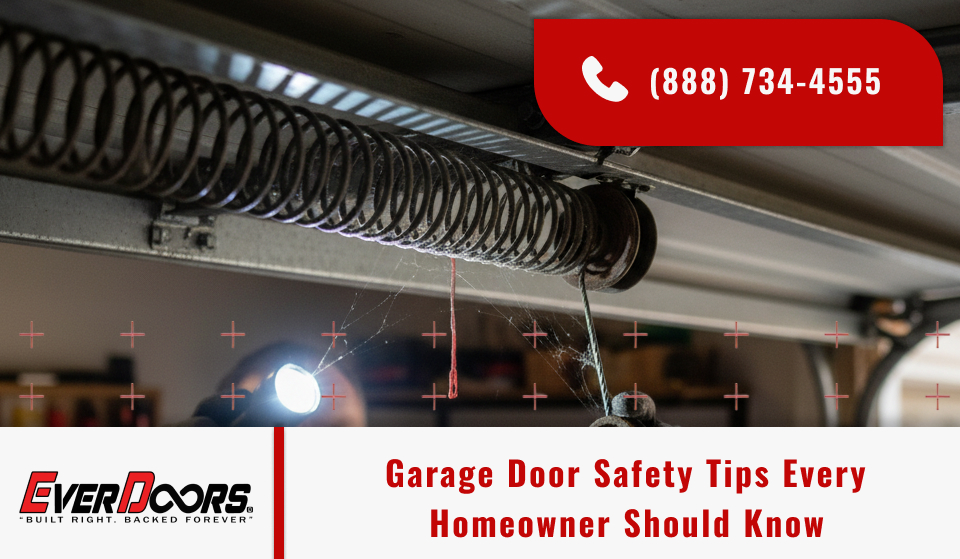
- Springs appear stretched, rusty, or have visible gaps in the coils
- Cables look frayed, loose, or disconnected
- The emergency release handle does not disconnect the door from the opener
A garage door safety tips expert near you ensures every safety component functions correctly. Specifically, they test, adjust, and replace safety systems to meet current federal standards. In addition, they inspect the entire door system for related problems that could create future hazards.
In geo-location, Do not wait for an accident to discover your safety features are not working. Instead, call today to schedule a professional safety inspection and protect your family with confidence.
Phone: (888) 734-4555
Email:
Website: https://oh.everdoors.com/